Soundproofing Walls
Hearing your noise through your walls? Mad at the builder for not building soundproof walls? Sorry to say it’s probably not the builders fault at all. North American Building Codes are not very helpful with noise levels. You do not have to build very soundproof walls to pass building code.
If you’re going to solve your noise problems coming through the walls, you’ll have to learn a little and do it yourself.
Ideally, when trying to reduce sound it is very advantageous to apply the soundproofing materials on the noise-producing side of the wall. However, if your neighbor is the noisy one, this would mean applying the soundproofing to his side, and generally noisy neighbors have no interest in helping. So you’ll have to treat your side.
One very important thing to keep in mind is the noise from your neighbor isn’t only pouring through your wall. Some amount of sound is flanking around that wall and also entering through the floor and ceiling.
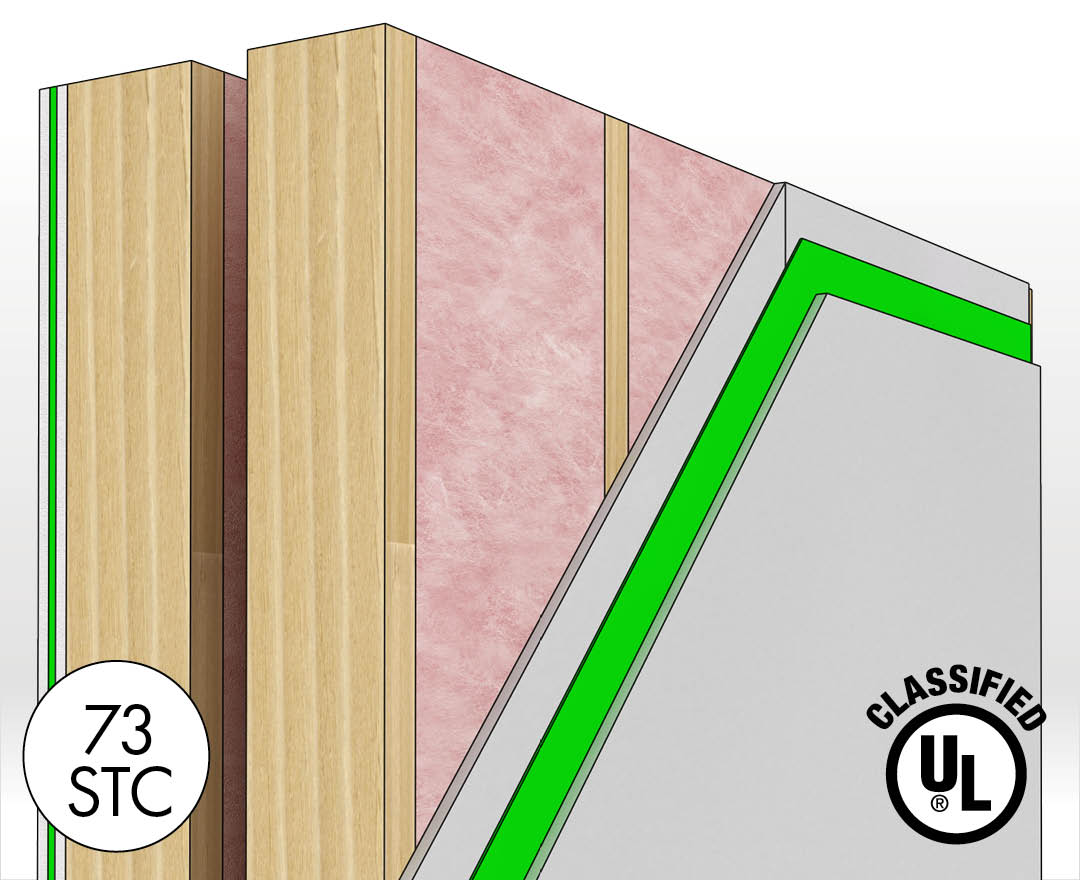
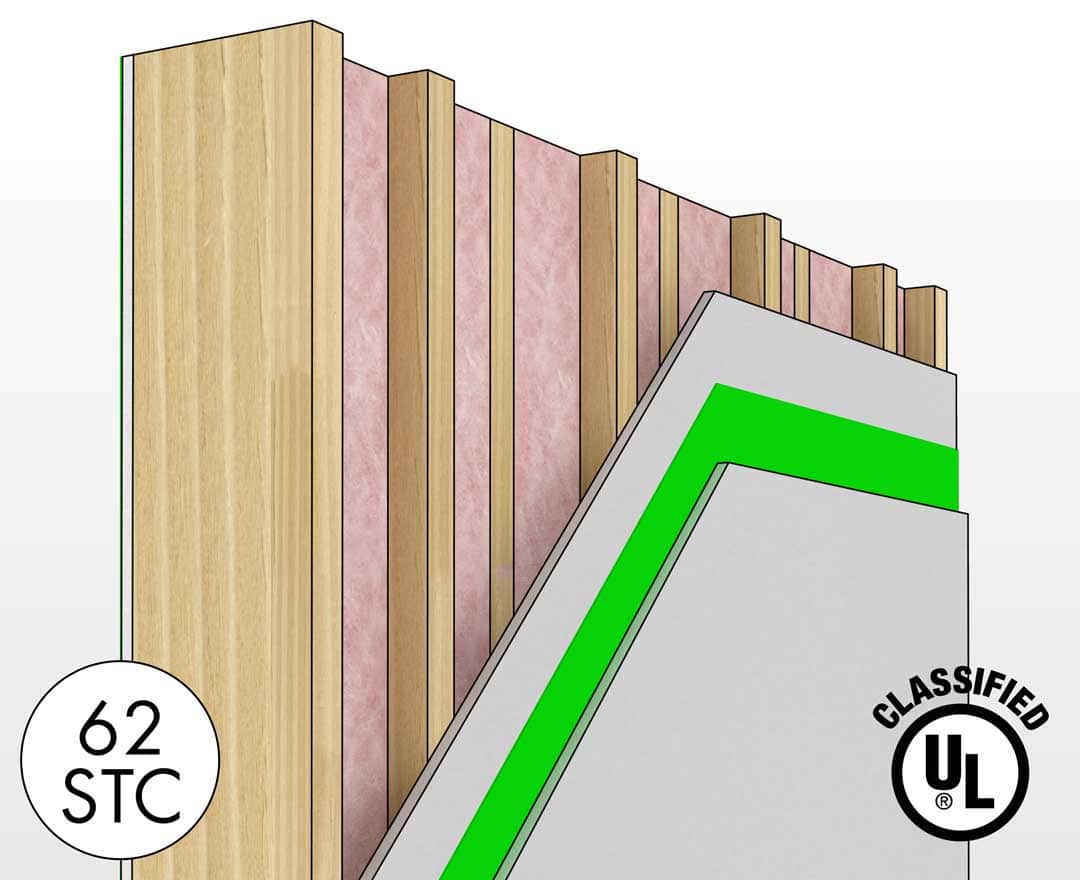
Here is a basic list of approaches in order of effectiveness. Sound Transmission Class (STC) is a common measurement of sound isolation. A higher STC figure means more sound isolation.
Solutions #4 and #5 also have significantly better low frequency (bass) isolation. This makes them advantageous if music or sound systems are involved. Let’s take a look at each of these soundproofing solutions more closely.
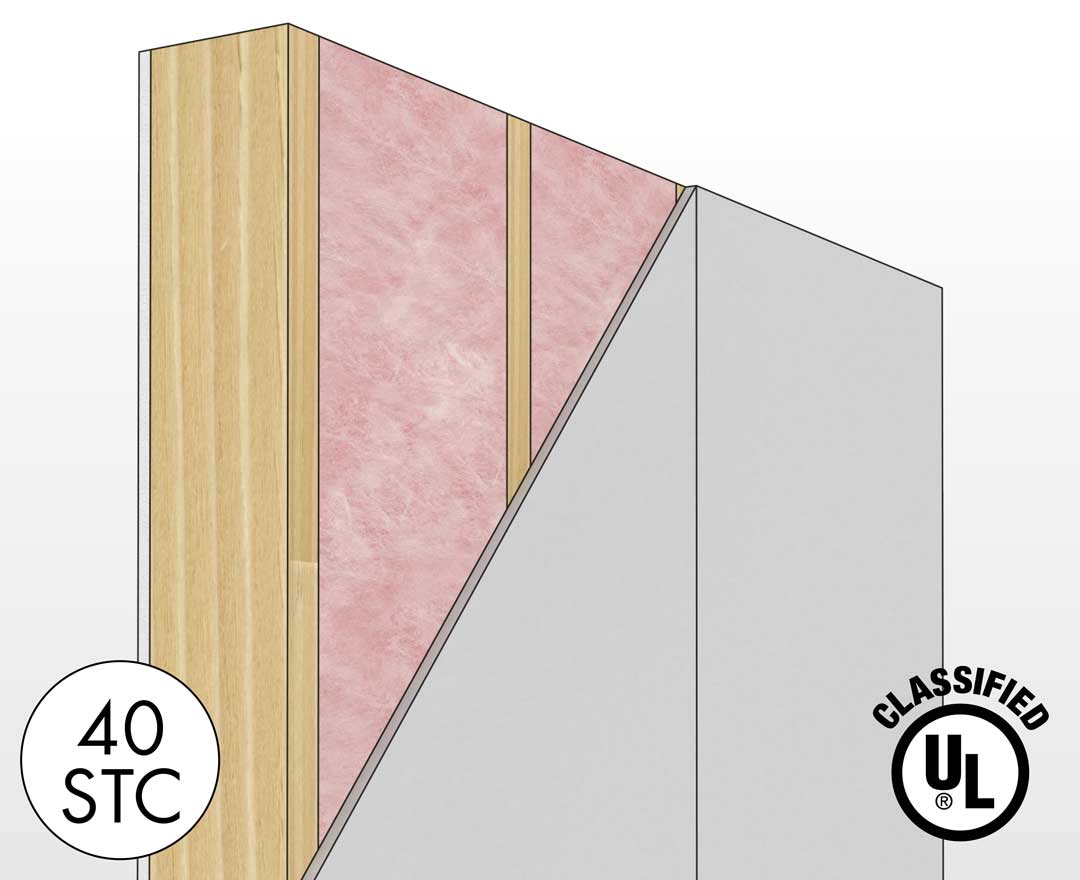
Soundproofing Walls Solution 1: Add Drywall
Sometimes just adding a second layer of drywall to your existing wall is all that is needed. The new drywall brings added Mass (weight), which is one of the 4 Elements of Soundproofing. A heavier wall is generally a more sound isolated wall.
| STC | Source Side | Studs | Insulation | Receive Side | Test # |
|---|---|---|---|---|---|
| 42 | Two 5/8" layers of drywall | 24" oc | R13 | One 5/8" layer of drywall | OL 05-1058 |
| Ease and Cost | Performance |
|---|---|
| Inexpensive Simple |
You can see from the test data above that this procedure would only yield an additional 2 STC points.While audible, this improvement is minimal. |
Soundproofing Walls Solution 2: Add Sound Deadening Board & Drywall
Sound-deadening board has been used for decades and is also sold under many trade names. It is a soft, fibrous board ½” thick and quite light. Generally tan or dark brown and found at building material centers. This is not to be confused with compressed fiberglass.
Sound boards or panels are very light, and therefore don’t contribute because of any addition of mass like the previous solutions. In this case, the lightweight sponginess offers a slight amount of Absorption (another of the 4 Elements of Soundproofing.) as well as minor Decoupling (yet another Element). Soundboard absorbs a little and decouples a little.
| STC | Source Side | Studs | Insulation | Receive Side | Test # |
|---|---|---|---|---|---|
| 44 | 5/8" drywall + 1/2" Soundboard + 5/8" drywall | 24" oc | R13 | 5/8" drywall | Estimated |
| 46 | 5/8" drywall + 1/2" Soundboard | 24" oc | R13 | 1/2" Soundboard + 5/8" drywall | OL 05-1056 |
| Ease and Cost | Performance |
|---|---|
| Inexpensive (sometimes) Fast Simple This adds at least an inch of thickness to your existing wall. |
You can see from the test data above that this procedure would yield an additional 6 STC points. The difference is audible and the improvement is moderate. |
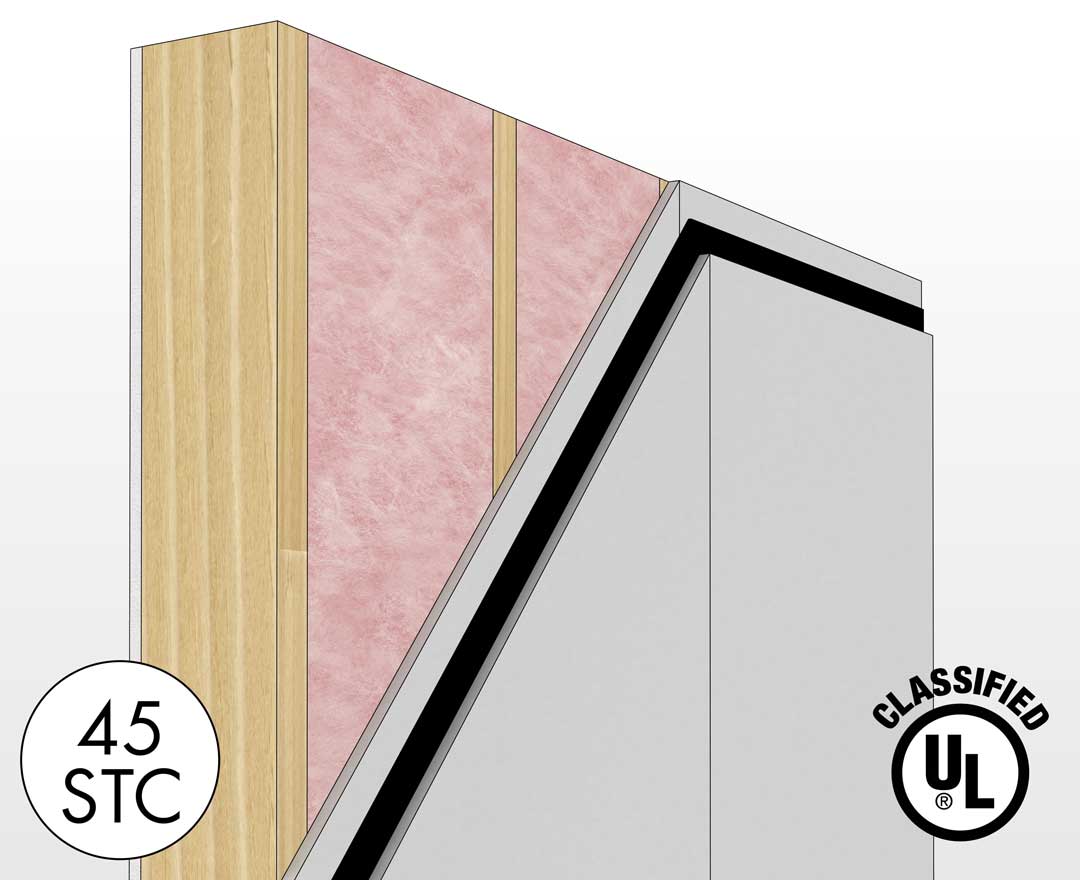
Soundproofing Walls Solution 3: Add Mass Loaded Vinyl & Drywall
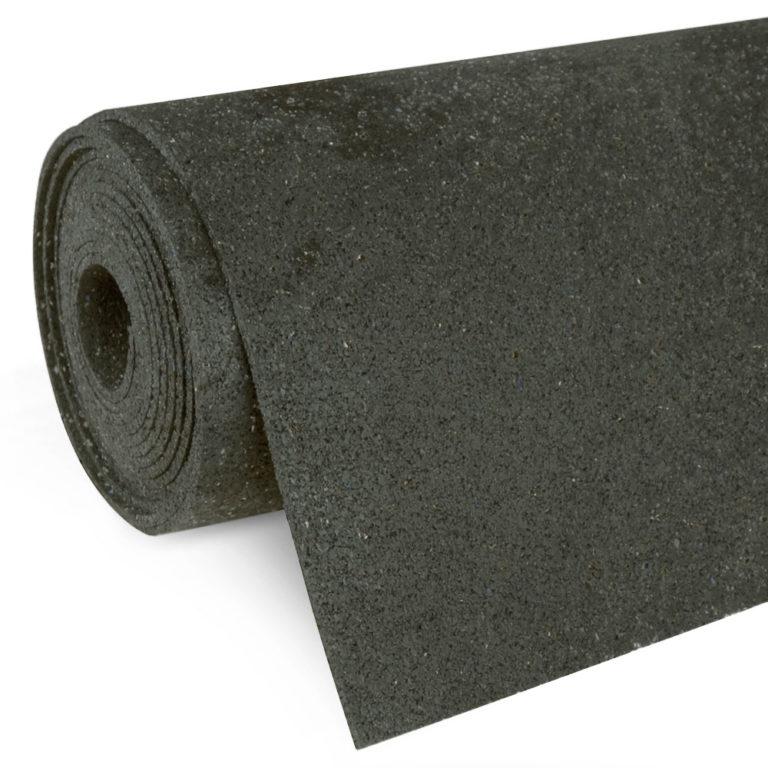
Mass Loaded Vinyl is sold under many different brand names, but in essence all (including ours) are a vinyl rubber made heavier by loading with Barium. This extra mass combined with the new drywall make the wall's much heavier and increases your walls soundproofing. This application will typically yield an additional 4-6 STC points to a wall.
| STC | Source Side | Studs | Insulation | Receive Side | Test # |
|---|---|---|---|---|---|
| 45 | 1/2" Drywall + MLV + 1/2" Drywall | 24" oc | R13 | 1/2" Drywall | OL 05-1054 |
| Ease and Cost | Performance |
|---|---|
| More expensive More difficult due to MLV installation Slower due to MLV |
You can see from the test data above that this procedure would yield an additional 4-6 STC points. The difference is audible and the improvement is moderate. |
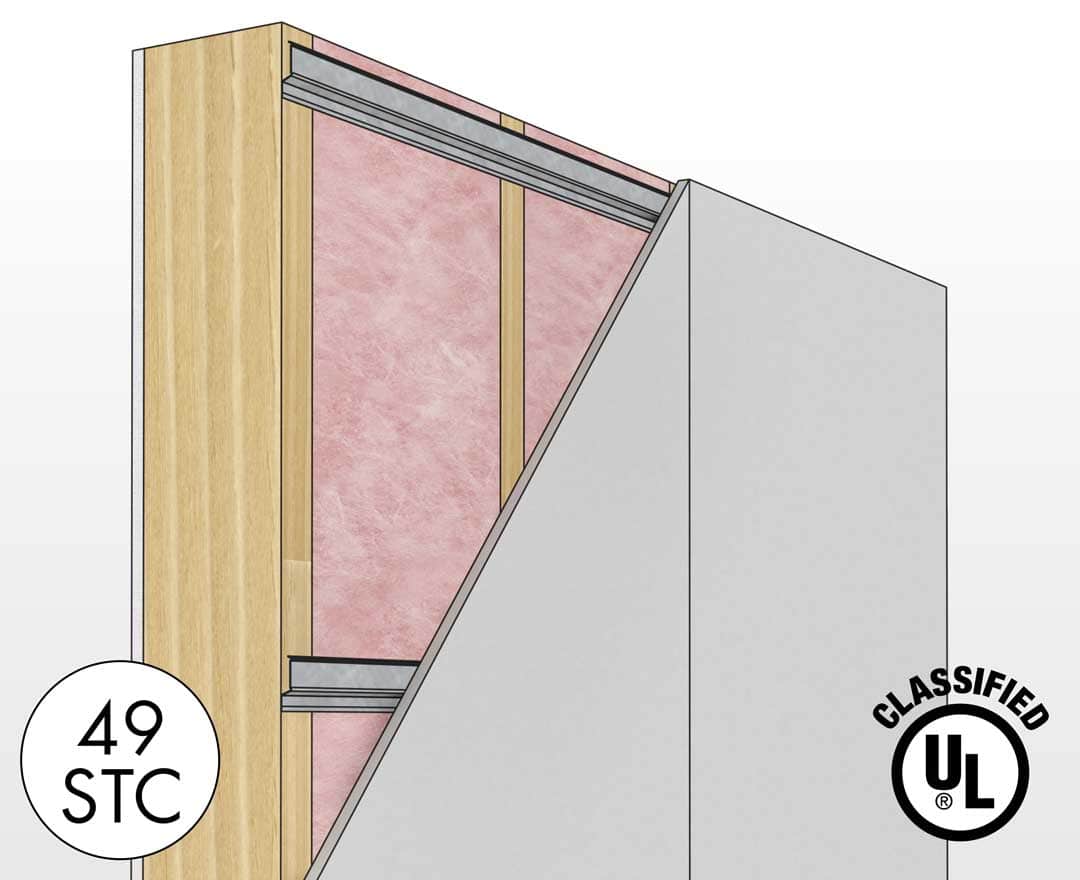
Soundproofing Walls Solution 4: Add Green Glue & Drywall
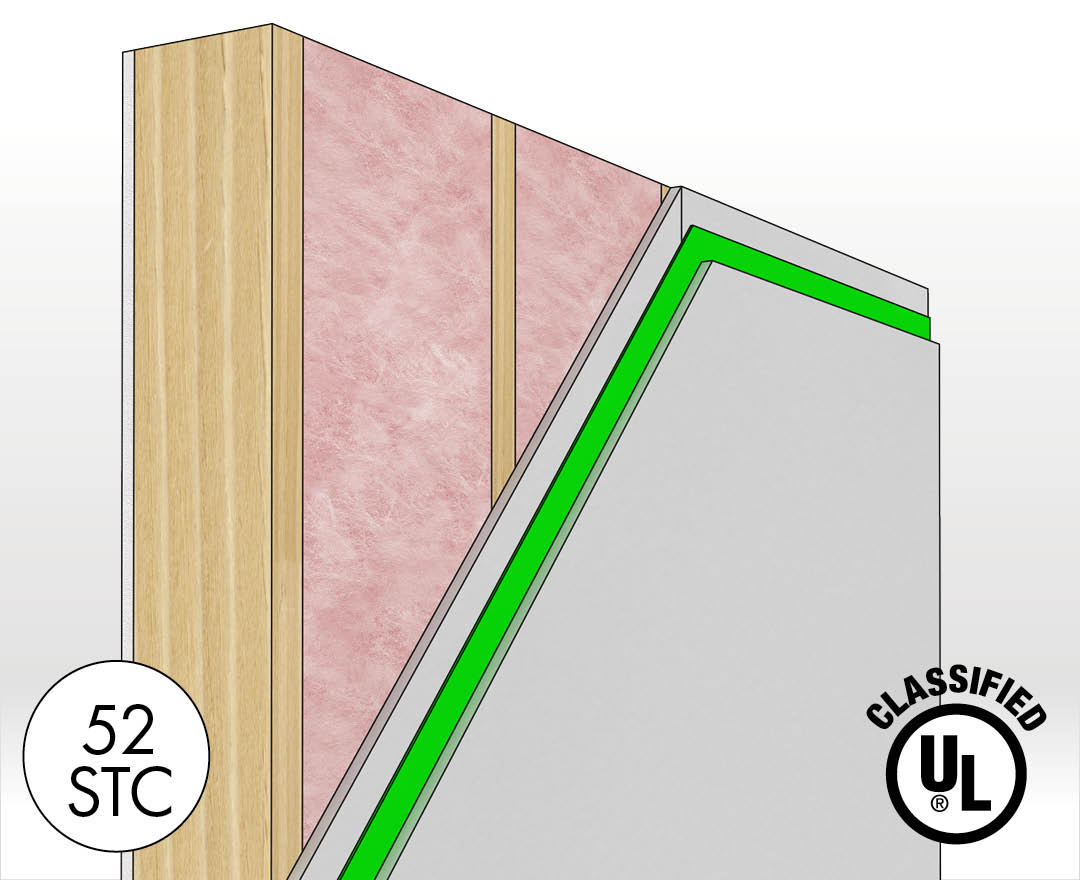
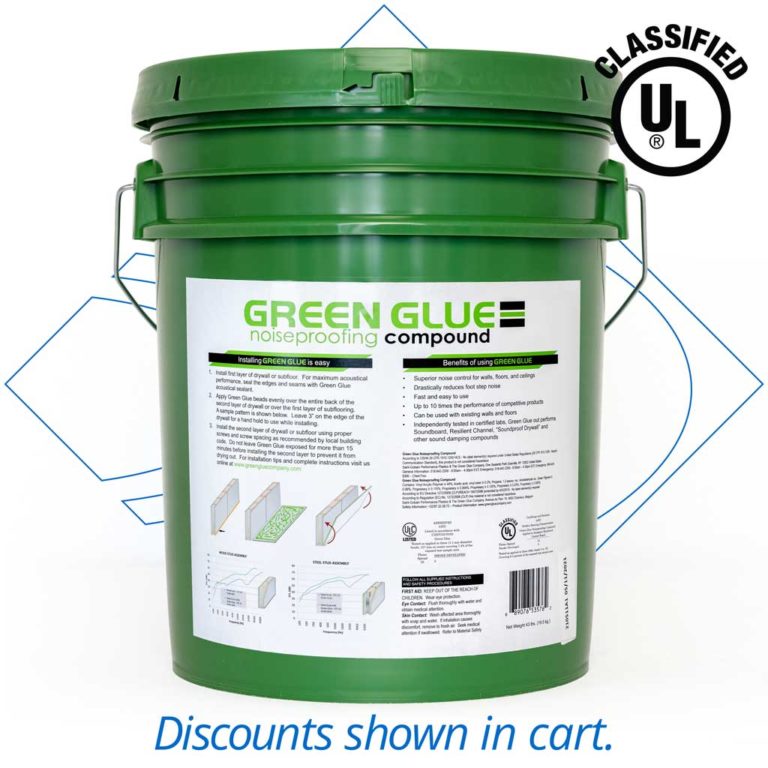
Adding Green Glue Soundproofing compound introduces the last Element of the 4 Elements of Soundproofing: Damping. Damping converts the vibration energy into heat energy. This is a very efficient process with great results. This is also the most common soundproofing solution for retrofitting walls.
| STC | Source Side | Studs | Insulation | Receive Side | Test # |
|---|---|---|---|---|---|
| 52 | Two 5/8" layers of drywall + 2 tubes of Green Glue per 4x8 sheet of drywall | 24" oc | R13 | One 5/8" layer of drywall | OL 05-0416 |
| Ease and Cost | Performance |
|---|---|
| Moderate expense Fast Simple Adds only 5/8” thickness to your existing wall. |
You can see from the test data above that this procedure would yield an additional 12 STC points. The difference is quite audible and the improvement is significant. Low frequencies show improvement. Flanking Noise is reduced. |
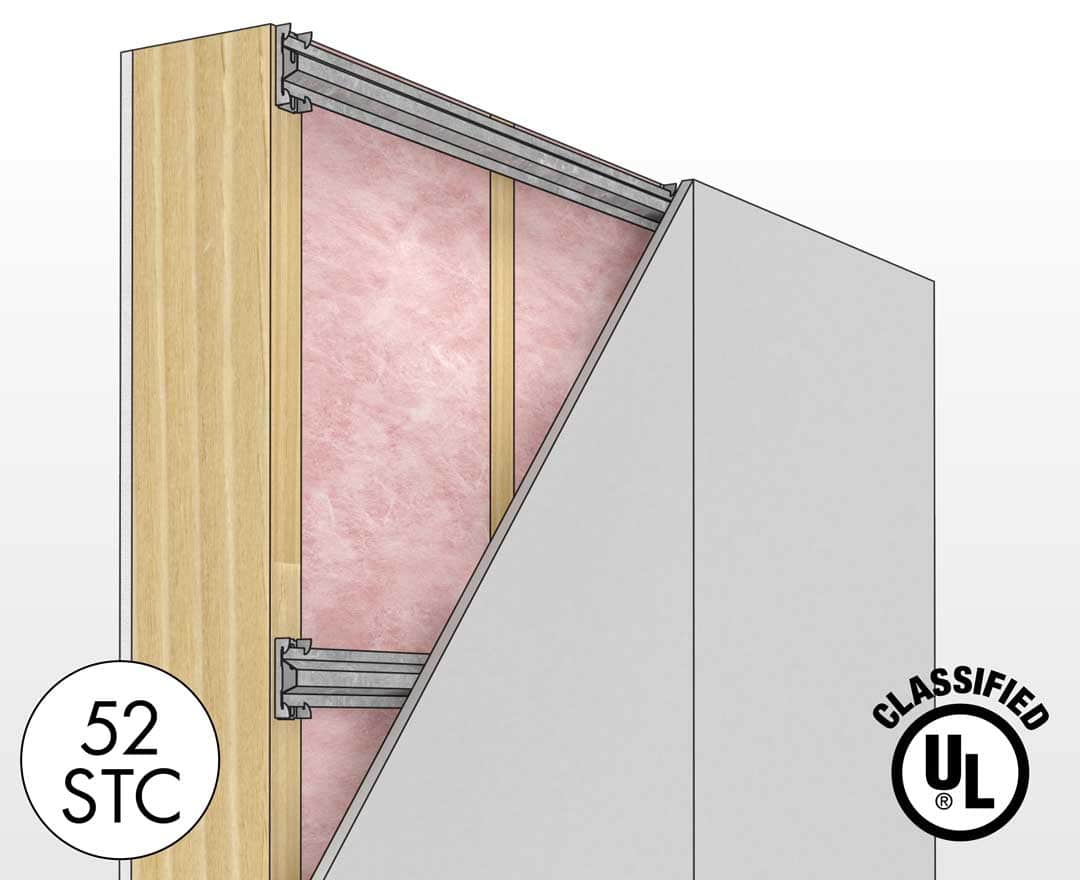
Solution 5: Add Resilient Clips, Channel, Green Glue & Drywall
This Solution is the highest performance and most definitive. It requires the removal of the existing drywall.
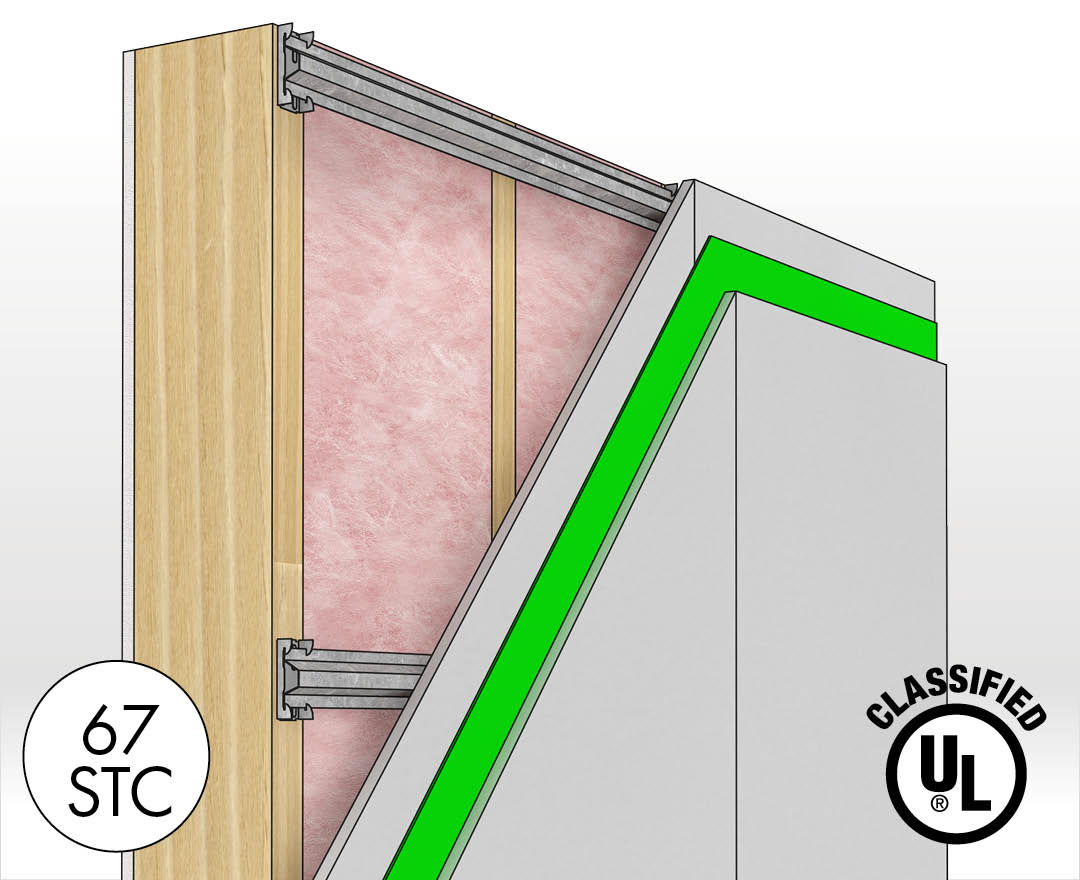
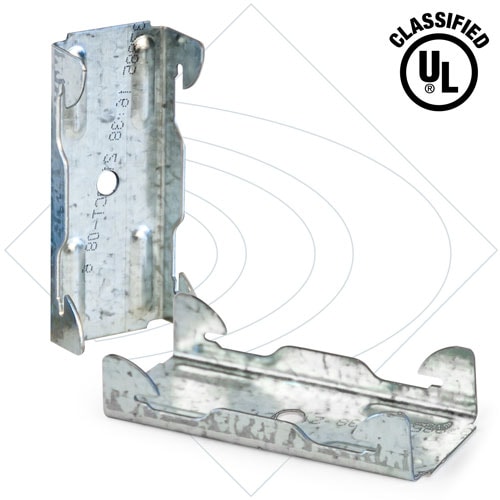
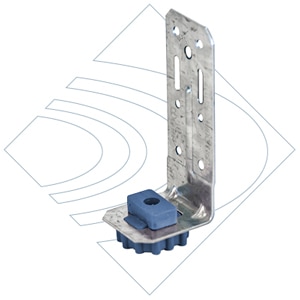
The most dramatic improvement from this technique comes from the introduction of competent decoupling via the use of Sound Isolation Clips and Drywall Furring Channel. This solution incorporates all 4 Elements of Soundproofing. You have Decoupling, Absorption, Mass and Damping. Certainly the most labor intensive, it is also far and away the most thorough solution.
- Allows you to seal the backs of his wall outlets from your side.
- Allows you to add standard R13 fiberglass if there is no insulation currently.
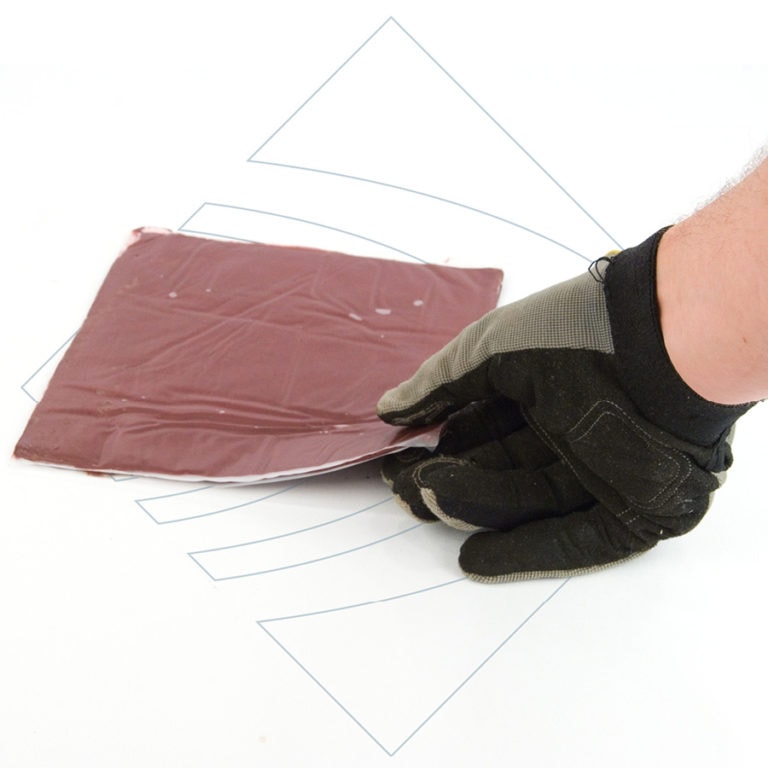
- Allows you to seal other openings and penetrations with Putty Pads.
| STC | Source Side | Studs | Insulation | Receive Side | Test # |
|---|---|---|---|---|---|
| 61 | Two 5/8" layers of drywall + 7/8" Drywall Furring Channel @ 24" OC + WhisperClip | 24" oc | R19 | One 5/8" layer of drywall | OL 08-0712 |
| 66 | Two 5/8" layers of drywall + Green Glue (2 Tubes per 4x8 sheet) + 7/8" Drywall Furring Channel @ 24" OC + WhisperClip | 24" oc | R19 | One 5/8" layer of drywall | Estimated |
| Ease and Cost | Performance |
|---|---|
| More expensive Adds almost 3” thickness to your existing wall. Requires removal of existing drywall. |
This procedure would yield an additional 21 STC points. The difference is very audible and the improvement is very significant. Low frequencies show significant improvement. Flanking noise is reduced. |
Summary
| Solution | STC | Source Side | Studs | Insulation | Receive Side | Test # |
|---|---|---|---|---|---|---|
| Ref. | 40 | One 5/8" layer of drywall | 24" oc | R13 | One 5/8" layer of drywall | OL 05-1003 |
| #1 | 42 | Two 5/8" layers of drywall | 24" oc | R13 | One 5/8" layer of drywall | OL 05-1058 |
| #2 | 44 | 5/8" drywall + 1/2" Soundboard + 5/8" drywall | 24" oc | R13 | 5/8" drywall | Estimated |
| - | 46 | 5/8" drywall + 1/2" Soundboard | 24" oc | R13 | 1/2" Soundboard + 5/8" drywall | OL 05-1056 |
| #3 | 45 | 1/2" Drywall + MLV + 1/2" Drywall | 24" oc | R13 | 1/2" Drywall | OL 05-1054 |
| #4 | 52 | Two 5/8" layers of drywall + 2 tubes of Green Glue per 4x8 sheet of drywall | 24" oc | R13 | One 5/8" layer of drywall | OL 05-0416 |
| - | 61 | Two 5/8" layers of drywall + 7/8" Drywall Furring Channel @ 24" OC + WhisperClip | 24" oc | R19 | One 5/8" layer of drywall | OL 08-0712 |
| #5 | 66 | Two 5/8" layers of drywall + Green Glue (2 Tubes per 4x8 sheet) + 7/8" Drywall Furring Channel @ 24" OC + WhisperClip | 24" oc | R19 | One 5/8" layer of drywall | Estimated |
Independent tests were conducted by Certified NVLAP acoustic laboratories.